The beauty market tends to reward brands that move with clarity and confidence. Choosing how your formulas will be produced, packaged, and scaled is a major decision, no matter if you’re preparing to launch your brand’s first product or expanding an existing line.
One of the most common paths taken by brands in the beauty sector is working with an OEM partner. If you understand how this model works, as well as where it lies with ODM and private label in the spectrum of collaboration, you can make smarter decisions that can impact your brand’s long-term growth. Below are seven insights that will help you see what OEM really means for your beauty business.
1) You Should Understand What OEM Means for Your Brand
OEM stands for original equipment manufacturer, and in the beauty sector, it refers to a company that manufactures products according to your brand’s specifications.
When you work with an OEM cosmetic manufacturer, you retain ownership of your brand and product concept. The formula requirements, packaging format, performance expectations, and even positioning of the product are all defined by you. Meanwhile, the manufacturer provides the facilities and equipment, plus the technical expertise needed, to produce the product under your brand name.
In practice, however, many beauty brands do not arrive with fully finalized specifications. Instead, they bring a vision and a target market to the manufacturer, then approach the product development process in a collaborative manner. In such arrangements, the manufacturer takes on the task of refining formulations and aligning the product with regulatory requirements. Depending on how closely you work together, you and your trusted OEM partner can lean toward an original design manufacturer (ODM) style of partnership.
In this arrangement, instead of investing in production infrastructure, you can rely on a partner that already has the necessary systems in place. This setup allows you to focus on building your brand presence and refining your marketing strategy. You can also devote more resources into strengthening distribution channels when you have a reliable manufacturer supporting your business.
2) You Should Recognize Why OEM Is So Common in Beauty
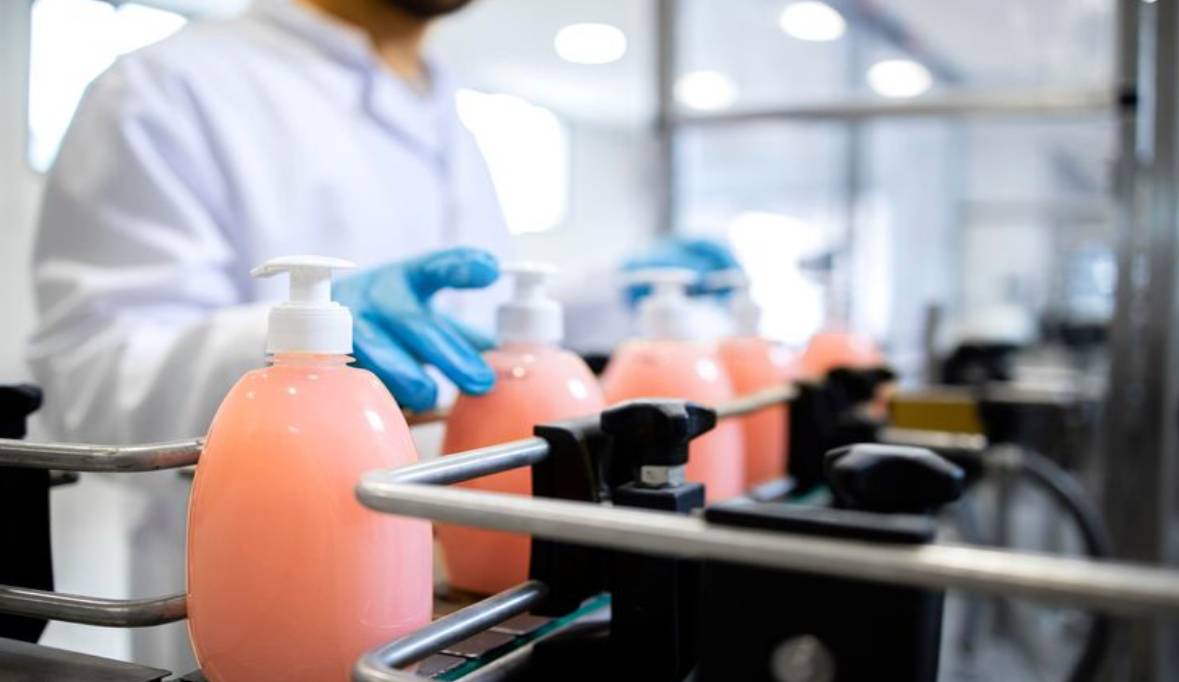
Manufacturing cosmetics is a complex process that involves specialized machinery and controlled production environments. It also requires the expertise of trained chemists, plus you need to comply with strict regulatory standards.
Establishing these capabilities internally requires significant capital and time, but it is often not the largest cost for first-time founders. You also need to set aside a significant portion of early investment for packaging design, branding, marketing campaigns, and influencer partnerships. By deciding to outsource production, you can allocate capital more strategically instead of tying it up in machinery and facilities.
Upon partnering with a trusted OEM manufacturer, you can do the following:
- Reduce upfront investment in facilities and equipment
- Shorten your time to market
- Access technical expertise in formulation and production
- Scale production as demand grows
This model is particularly helpful when you want to test new product categories. For instance, if you plan to expand from skincare creams into aerosol-based sunscreens or hair styling sprays, working with a manufacturer that already specializes in those formats, such as Natura Aeropack, saves you from building entirely new capabilities from scratch.
3) You Should Distinguish OEM from Other Manufacturing Models
As you explore your options, you may also encounter terms like ODM and private label. Understanding the distinction helps you choose the right level of control.
With OEM, you typically bring your own concept and detailed requirements. The manufacturer produces according to your specifications. This gives you greater influence over formulation, ingredients, and product performance. On the other hand, with ODM, the manufacturer often develops the product concept and formula, and you apply your branding to it. Meanwhile, the use of private label generally involves selecting a ready-made product that can be branded with minimal customization.
Rather than viewing these as completely separate models, you can think of them as points along a continuum. At one end, private label offers speed with minimal customization. In the middle, ODM allows deeper collaboration on formulation and design. At the other end, OEM provides higher levels of specification control.
Many successful beauty launches are supported by partnerships that sit somewhere between OEM and ODM. This avenue lets you differentiate your products more clearly while still allowing your brand to benefit from professional manufacturing support.
4) Use OEM to Support Innovation without Overextending Your Brand
Innovation drives growth in beauty. Consumers, after all, are always on the lookout for improved textures, convenient application methods, and packaging that feels modern and safe. However, innovation can quickly become expensive if you attempt to handle every technical detail in-house.
An experienced OEM partner helps you bring new ideas to market while managing technical complexity. Consider how aerosol products like facial mists and body foams require precise filling systems and controlled propellant handling. These also need to be made in a modern manufacturing facility that implements strict safety measures. These are not minor adjustments to standard cosmetic production.
If you collaborate with a specialist early on, you can introduce advanced delivery formats without compromising safety or efficiency. Consider that sampling can take roughly 3 to 6 weeks depending on raw material availability and the level of customization, while product development and stability testing may require 10 to 24 weeks. You also need to make time for regulatory review and product registration, which can take an additional 2 to 6 weeks. In many cases, a full launch timeline ranges from six months to one year. Planning ahead with an experienced OEM partner allows you to benefit from production insights that can refine your product’s consistency and stability. This approach also lets you innovate with discipline rather than risk.
In contrast, waiting until every detail is finalized can lead to costly revisions. This is especially true if you need to make adjustments to accommodate packaging compatibility, raw material availability, or regulatory requirements.
5) Aim to Strengthen Compliance and Quality Assurance
Regulatory compliance is not optional in the beauty industry. Successful brands ensure that labeling accuracy, ingredient safety, and manufacturing standards are aligned with local and international regulations. Any lapse in these areas can damage your reputation and lead to costly setbacks.
When selecting an OEM partner, you should look for strong quality systems and clear documentation processes. A reliable manufacturer will typically:
- Operate under Good Manufacturing Practices (GMP)
- Conduct rigorous quality control checks
- Maintain proper batch records and traceability
- Support compliance with labeling and safety requirements
These systems protect your brand. They also provide reassurance to distributors and retailers who expect consistent standards.
6) See OEM as a Tool for Scalable Growth
Your production needs will change as your brand evolves. In the early stages, you may require smaller runs to test market response. As demand increases, you need the ability to scale without sacrificing quality.
OEM partnerships are structured to help you adapt to these changing business needs. You can begin with manageable volumes and gradually expand as your distribution network grows. For many contract manufacturers, minimum order quantities (MOQs) typically range from 5,000 to 10,000 units depending on packaging type and formulation complexity. The level of flexibility that an OEM partner offers can reduce financial risk while giving you room to respond to consumer trends. Instead of being locked into fixed overhead costs, you align production volume with actual demand. That balance supports healthier cash flow and more controlled expansion.
7) Choose an OEM Partner That Aligns with Your Vision
Beyond production capacity, you should consider an OEM partner that aligns with your values, the way you communicate, and your long-term goals.
If sustainability is central to your brand positioning, for instance, you should evaluate whether your OEM partner can support responsible practices and efficient production methods. Check if they offer packaging solutions that reduce environmental impact as well. The right partner strengthens your credibility, not just your output.
Partner with Natura Aeropack for Specialized OEM Solutions
In the end, choosing the right OEM partner is about more than production capacity. You need a company that combines technical expertise with forward-thinking practices. Natura Aeropack supports beauty brands through modern R&D facilities, structured development processes, and a strong commitment to sustainability. With capabilities spanning OEM and ODM-style collaboration, the team works closely with clients to refine formulations, align packaging with performance requirements, and navigate regulatory pathways efficiently.
From concept refinement and formulation support to full-scale manufacturing, our company offers comprehensive OEM and ODM services designed to help you build products that meet market expectations while aligning with responsible production standards. If you’re looking for an OEM partner that values quality and innovation alongside sustainable growth, let’s collaborate. Get in touch with Natura Aeropack today to explore how we can help bring your next beauty product to life.